
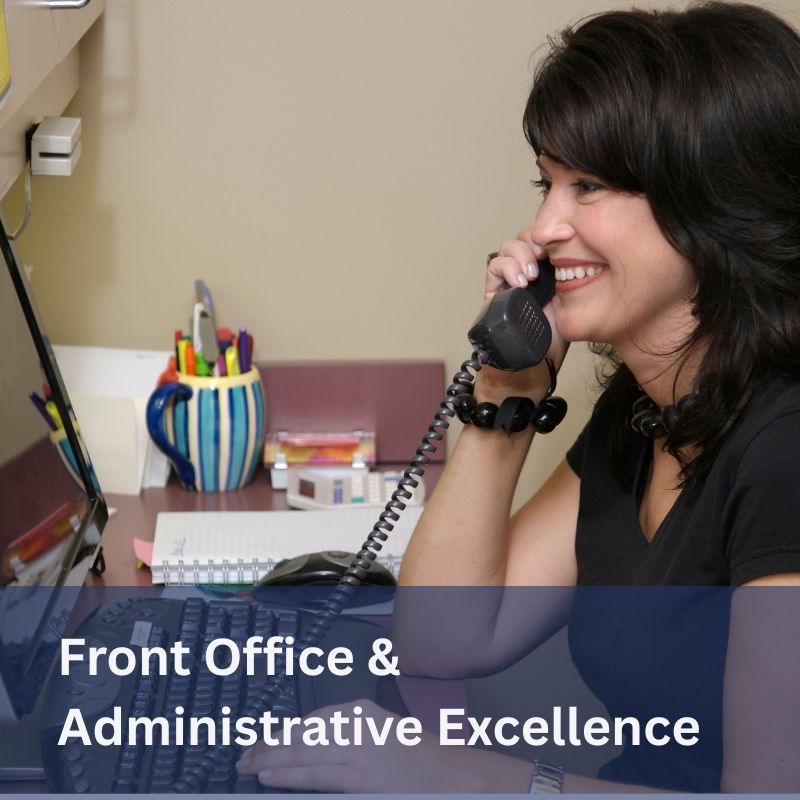
Front Office & Administrative Excellence
Wishlist Share

About Course

The front office is the heartbeat of every funeral home, setting the tone for how families, visitors, and the community experience your care. Front Office and Administrative Excellence equips funeral service professionals and support staff with the skills needed to create a seamless, compassionate, and professional administrative environment. Participants will learn proven strategies for client interaction, appointment and file management, phone and digital communication etiquette, scheduling, and compliance documentation. Emphasis is placed on attention to detail, organizational efficiency, and delivering a welcoming first impression that reflects the values of excellence and dignity in funeral service.

Show More

What Will You Learn?

  • Demonstrate professional front-office communication skills, both in-person and over the phone.
  • Apply organizational strategies to streamline administrative tasks, scheduling, and documentation.
  • Manage sensitive client information with confidentiality and compliance awareness.
  • Create a positive and supportive environment for grieving families through administrative professional

Course Content

Course Introduction
Summary: The introduction sets the stage for the course by highlighting the role of the front office in creating first impressions, supporting families, and ensuring smooth funeral home operations. Learners are oriented to the importance of professionalism, organization, and compassion in administrative excellence. Objectives: By the end of the introduction, learners will be able to: • Explain the purpose and scope of the Front Office and Administrative Excellence course. • Recognize the importance of the front office as a central hub in funeral service operations. • Identify the key skills and qualities that contribute to administrative excellence.

  • Course Introduction Video
    01:57

Module 1: The Role of the Front Office in Funeral Service
Summary: Covers the significance of the front office as the first point of contact for families and visitors. Emphasizes professionalism, confidentiality, and the essential role administrative staff play in the success of funeral service operations. Objectives: By the end of this module, learners will be able to: • Explain the importance of the front office as the first point of contact for families. • Demonstrate professional standards of conduct, confidentiality, and presentation. • Identify key responsibilities of front office staff in supporting funeral operations.

Module 2: Communication and Family Interaction
Summary: Focuses on empathetic, clear, and professional communication with grieving families. Builds skills in active listening, verbal and written communication, and creating positive, supportive interactions. Objectives: By the end of this module, learners will be able to: • Apply active listening and empathy when communicating with grieving families. • Demonstrate clear, professional written and verbal communication skills. • Recognize nonverbal communication cues that influence family interactions.

Module 3: Organization and Scheduling
Summary: Introduces strategies for managing calendars, coordinating services, and balancing multiple responsibilities. Highlights time management and prioritization skills critical in a fast-paced funeral home environment. Objectives: By the end of this module, learners will be able to: • Use calendars and scheduling tools to coordinate funeral services and appointments. • Apply time-management strategies to balance multiple priorities effectively. • Demonstrate organizational skills that ensure smooth front office workflow.

Module 4: Documentation, Recordkeeping, and Compliance
Summary: Explains accurate recordkeeping practices, confidentiality, and compliance with legal and regulatory requirements. Covers vital records, contracts, death certificates, and documentation standards that protect both families and the funeral home. Objectives: By the end of this module, learners will be able to: • Complete and maintain accurate vital records, contracts, and service documents. • Ensure compliance with confidentiality and recordkeeping regulations. • Recognize how accurate documentation protects families and funeral homes.

Module 5: Technology and Office Systems
Summary: Explores funeral home management software, digital communication systems, and office technology. Emphasizes efficiency, professionalism in digital correspondence, and maintaining data security.. Objectives: By the end of this module, learners will be able to: • Utilize funeral management software and digital office tools efficiently. • Demonstrate professionalism in digital correspondence and client communication. • Apply best practices for data protection and information security.

Module 6: Financial Transactions and Administrative Compliance
Summary: Outlines front office responsibilities in processing payments, invoices, and contracts while ensuring transparency and accuracy. Reviews FTC Funeral Rule, OSHA, and state-level compliance responsibilities relevant to administrative work. Objectives: By the end of this module, learners will be able to: • Process payments, invoices, and contracts with accuracy and transparency. • Apply knowledge of FTC Funeral Rule and OSHA compliance to administrative tasks. • Maintain ethical and professional standards in financial documentation.

Module 7: Teamwork and Interdepartmental Support
Summary: Highlights the role of the administrative professional in supporting funeral directors, embalmers, and other staff. Focuses on collaboration, adaptability, and maintaining clear communication across departments. Objectives: By the end of this module, learners will be able to: • Explain the role of administrative staff in supporting funeral directors and other team members. • Demonstrate collaboration and adaptability across departments. • Communicate effectively to maintain smooth service coordination.

Module 8: Professional Growth and Continuous Improvement
Summary: Encourages self-assessment, ongoing learning, and career development. Provides strategies for setting goals, enhancing professional etiquette, and pursuing continuous improvement to maintain excellence in administrative service. Objectives: By the end of this module, learners will be able to: • Identify opportunities for ongoing professional development and training. • Demonstrate professional etiquette and behaviors that enhance workplace credibility. • Develop a personal growth plan with measurable short- and long-term goals.

Course Conclusion: Elevating the Standard
Summary: The conclusion reinforces the critical role administrative professionals play in supporting funeral service. Learners reflect on the knowledge and skills gained and explore how to apply them to their daily work. Emphasis is placed on continuous improvement, professional growth, and maintaining dignity and compassion in every task. Objectives: By the end of the conclusion, learners will be able to: • Summarize the essential competencies gained throughout the course. • Reflect on their role in enhancing both family care and operational success. • Commit to applying professional growth and continuous improvement strategies in their work.

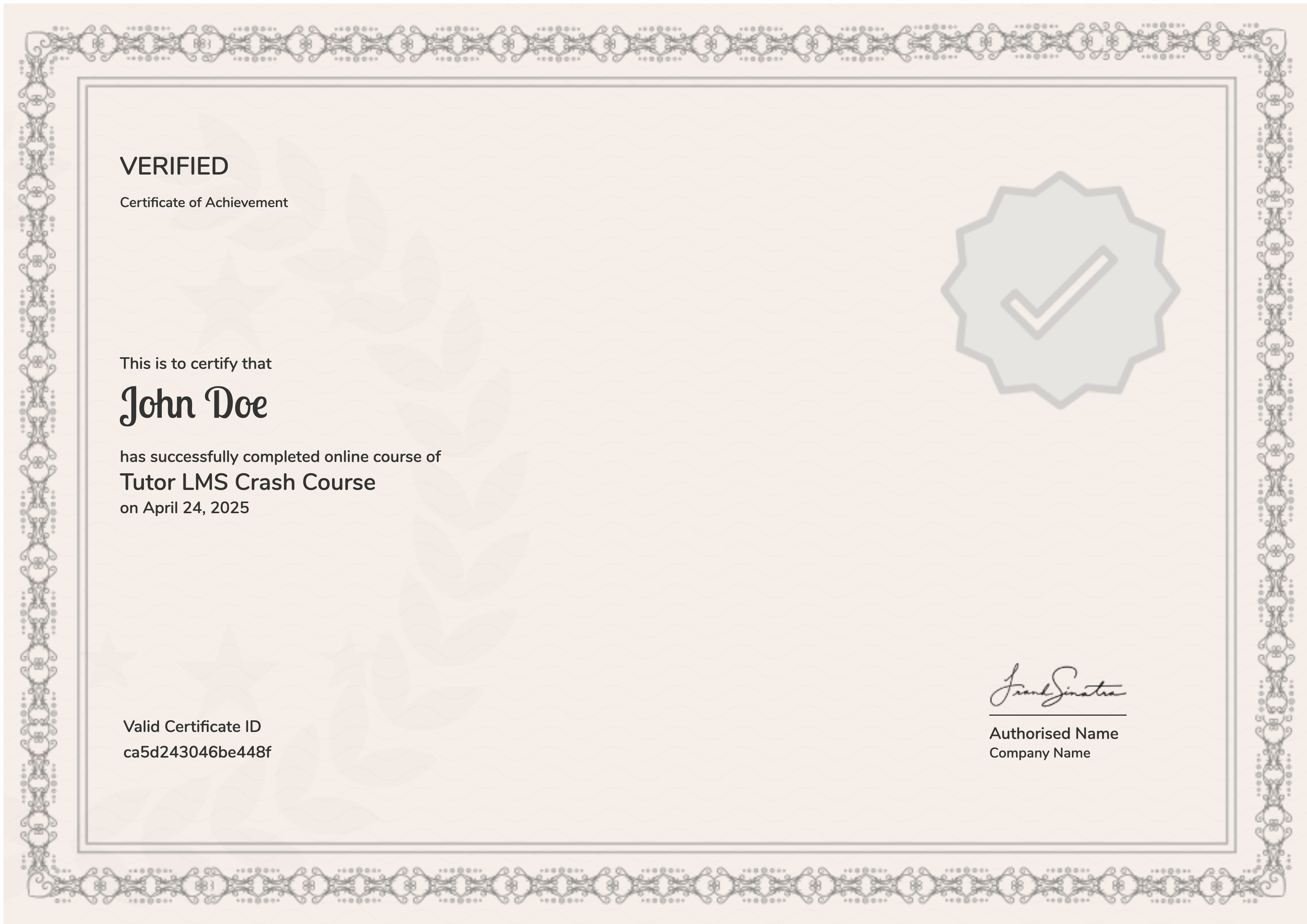
Earn a certificate

Add this certificate to your resume to demonstrate your skills & increase your chances of getting noticed.
selected template

Student Ratings & Reviews

No Review Yet
No Review Yet
Shopping Cart
Scroll to Top