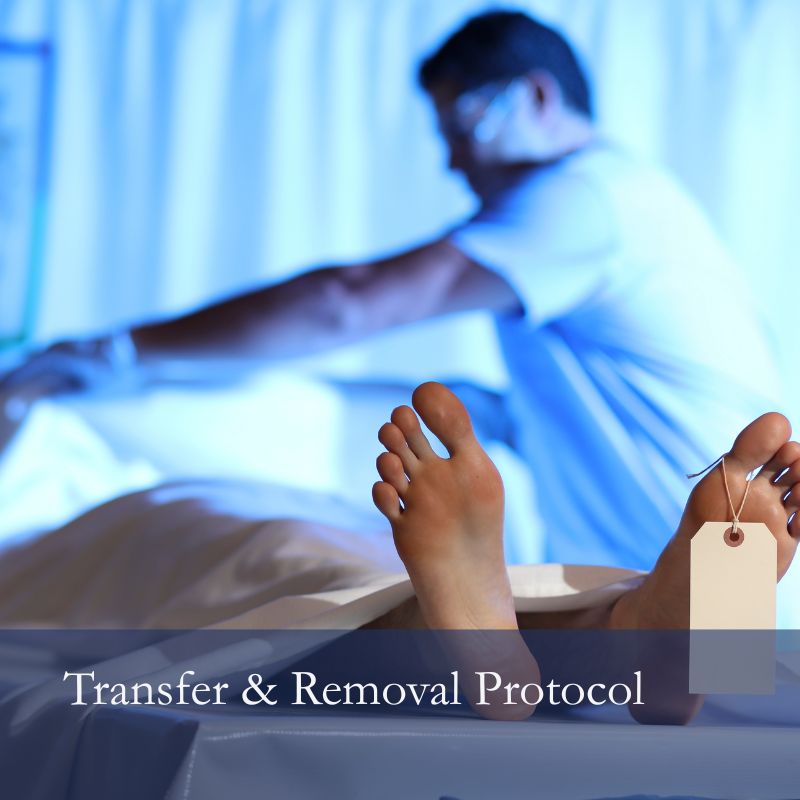
Transfer & Removal Protocols

Wishlist Share

About Course

The transfer, or removal, of human remains is one of the most sensitive and visible duties of the funeral service professional. Families often form their first impressions of a funeral home during this process. Proper training in transfer and removal protocols ensures that every interaction is handled with dignity, safety, and professionalism.

This course provides funeral professionals with a detailed understanding of best practices for removals from residences, hospitals, nursing facilities, accident scenes, and other locations. Participants will learn about proper equipment usage, infection control and OSHA compliance, communication with families and healthcare staff, and techniques for handling challenging environments or circumstances. Emphasis is placed on respect for the deceased, sensitivity to the bereaved, and risk management for staff safety.

Through a combination of standards, real-world scenarios, and practical techniques, this course equips participants to conduct transfers that are safe, efficient, and compassionate, setting the tone for all subsequent services.

Show More

What Will You Learn?

  • Demonstrate proper transfer and removal techniques that ensure safety and dignity.
  • Identify OSHA and infection control standards applicable to removals.
  • Apply professional communication skills with families, healthcare staff, and first responders.
  • Select and use the appropriate equipment for various removal situations.
  • Implement risk mitigation strategies when working in complex or hazardous environments.
  • Uphold ethical and professional standards to create positive first impressions of funeral service.

Course Content

Course Introduction
The introduction sets the stage by emphasizing the critical role of removals in shaping family impressions and ensuring professional standards. Participants will gain an overview of course objectives and expectations. Objectives: • Explain why the transfer/removal process is foundational to funeral service professionalism. • Identify the goals and outcomes of the course. • Recognize the importance of safety, dignity, and first impressions.

  • Course Introduction Video
    01:37

Module 1: The Role and Purpose of Transfer and Removal
Explores why removals are more than logistical tasks—they are sacred responsibilities and the beginning of the family’s funeral home experience. Objectives: • Describe the purpose and significance of the transfer/removal process. • Understand the emotional and psychological impact on families. • Recognize the ethical obligations tied to removals.

Module 2: Equipment, Supplies, and Vehicle Readiness
Covers the tools and preparation needed to conduct safe and professional removals, from stretchers and protective gear to vehicle maintenance and readiness. Objectives: • Identify essential removal equipment and their proper uses. • Demonstrate readiness checks for vehicles and supplies. • Apply safe lifting and handling practices using available tools.

Module 3: Infection Control and OSHA Compliance
Focuses on regulatory standards and best practices for protecting staff, families, and the public during removals. Objectives: • Apply OSHA standards and Universal Precautions in the removal process. • Demonstrate proper use of PPE (Personal Protective Equipment). • Implement decontamination and infection control measures.

Module 4: Communication and Professional Interaction
Examines strategies for interacting with grieving families, healthcare staff, and first responders in a respectful and professional manner. Objectives: • Demonstrate effective verbal and non-verbal communication during removals. • Recognize appropriate professional etiquette in hospitals, nursing homes, and private residences. • Employ empathy and tact when supporting families in high-stress situations.

Module 5: Removal Procedures by Setting
Provides step-by-step protocols for conducting removals in varied environments: residences, hospitals, nursing facilities, accident scenes, and public spaces. Objectives: • Apply removal procedures appropriate to each environment. • Navigate logistical challenges unique to each setting. • Maintain professionalism and discretion in all circumstances.

Module 6: Handling Difficult or Hazardous Situations
Covers strategies for removals in complex or high-risk environments, such as trauma cases, tight spaces, or hazardous conditions. Objectives: • Identify potential risks in difficult removal environments. • Apply risk-mitigation strategies to ensure safety. • Demonstrate adaptability and problem-solving under pressure.

Module 7: Documentation, Chain of Custody, and Risk Management
Focuses on legal, ethical, and operational record-keeping, ensuring proper documentation and custody of remains. Objectives: • Complete required removal documentation accurately and efficiently. • Maintain chain of custody and accountability. • Implement risk management practices to reduce liability. TO DELETE

Module 8: Upholding Dignity, Ethics, and Professional Standards
Explores the broader ethical responsibilities tied to removals, reinforcing the values of respect, discretion, and professionalism. Objectives: • Demonstrate practices that uphold dignity for the deceased and family. • Recognize ethical boundaries and professional responsibilities. • Create positive impressions that build trust in funeral service.

Course Conclusion
Reviews key concepts, reinforces professional standards, and connects removal protocols to the broader mission of funeral service. Assessment may include a written quiz and practical demonstration. Objectives: • Summarize the core principles of safe, professional removals. • Apply learned techniques in practical, scenario-based assessments. • Commit to ongoing improvement in professional transfer/removal practices.

Earn a certificate

Add this certificate to your resume to demonstrate your skills & increase your chances of getting noticed.
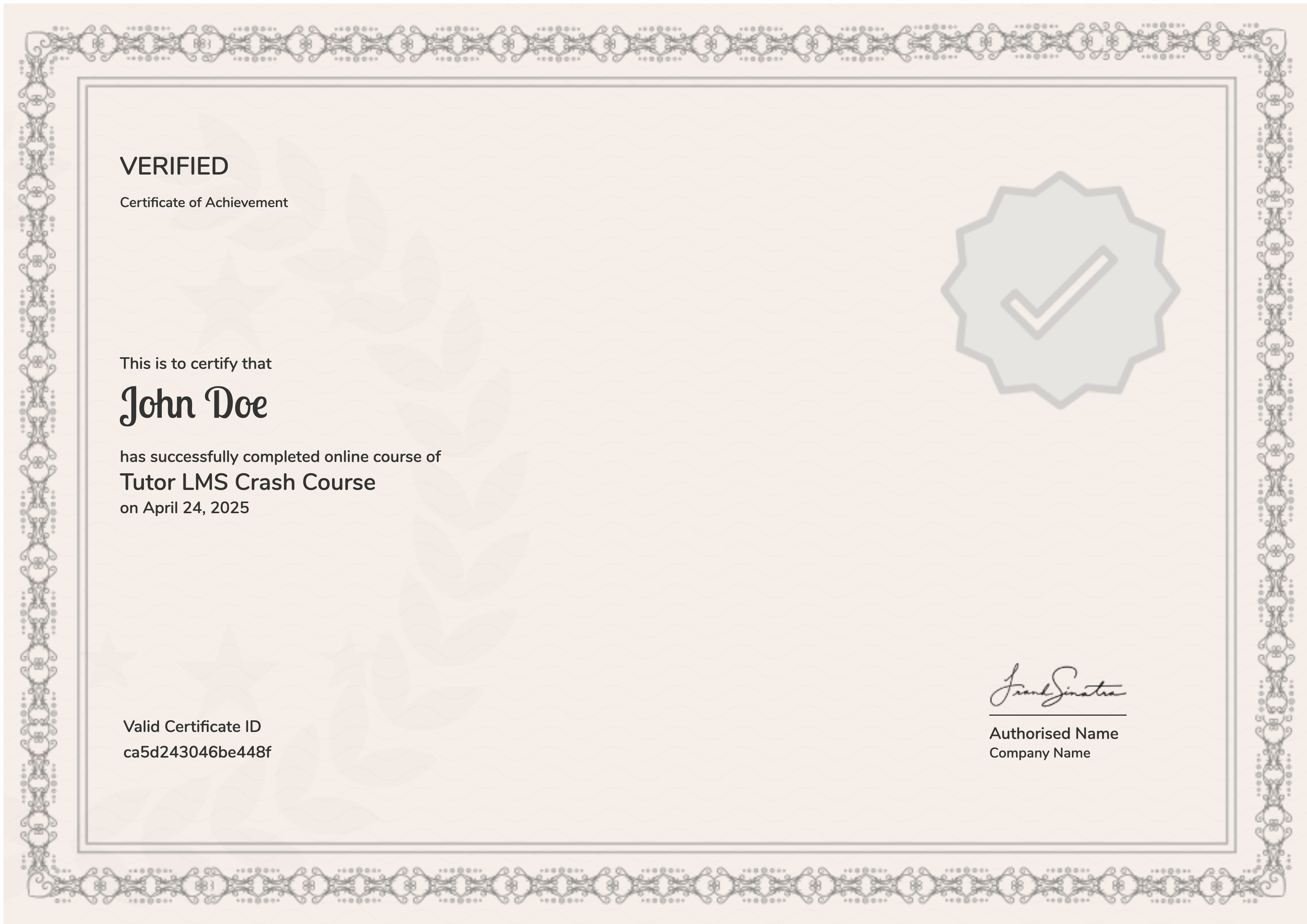
selected template

Student Ratings & Reviews

No Review Yet
No Review Yet
Shopping Cart
Scroll to Top