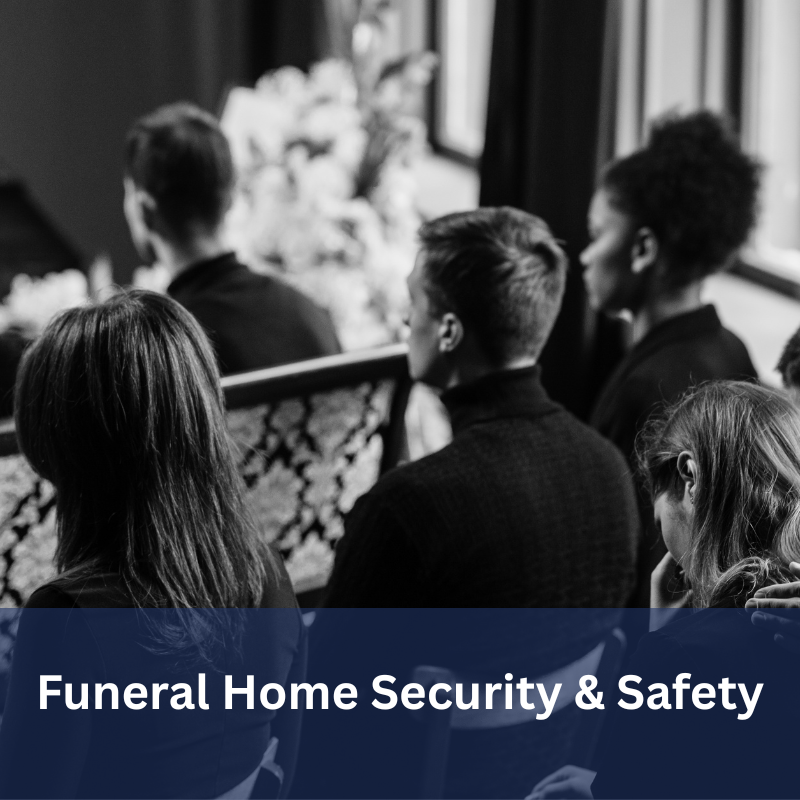
Funeral Home Security & Safety

Wishlist Share

About Course

Funeral homes are places of care, compassion, and community gathering, but they are also workplaces that face unique safety and security challenges. From protecting staff and visitors to safeguarding facilities and sensitive information, funeral directors and their teams must be prepared to respond to a wide range of risks.

This course provides funeral professionals with a comprehensive understanding of funeral home security and safety protocols. Topics include facility security, workplace violence prevention, OSHA and workplace safety standards, emergency preparedness, and handling sensitive situations with professionalism and discretion. Participants will explore both proactive strategies for risk prevention and reactive measures for managing incidents effectively when they occur.

Emphasis is placed on creating a culture of safety within the funeral home, ensuring that staff are trained, prepared, and confident in protecting themselves and the families they serve. By blending real-world examples, industry standards, and practical tools, this training equips participants to maintain a secure, safe, and dignified environment for all.

Show More

What Will You Learn?

  • Identify common safety and security risks specific to funeral homes and funeral service operations.
  • Implement best practices for facility security, access control, and protection of sensitive areas.
  • Apply OSHA standards and workplace safety protocols to reduce accidents and maintain compliance.
  • Develop emergency response plans for events such as medical emergencies, natural disasters, or disruptive incidents.
  • Foster a culture of safety and awareness among funeral home staff to enhance overall protection and preparedness.

Course Content

Course Introduction
Introduces the unique safety and security challenges funeral homes face, emphasizing the dual responsibility of compassion and protection. Frames safety not as a burden, but as a professional standard that supports dignity and trust. Objectives: · Set the stage for why safety and security matter in funeral service. · Connect safety protocols to professionalism and community trust. · Outline the course structure and expectations.

  • Course Introduction Video
    02:10

Module 1: Understanding Funeral Home Safety and Security Risks
Explore the most common risks faced by funeral homes, including facility vulnerabilities, workplace hazards, and external threats. Objectives: · Identify physical, operational, and reputational risks. · Recognize funeral home–specific risk factors (public gatherings, late-night operations, sensitive documents). · Understand the importance of proactive risk assessment.

Module 2: Facility Security and Access Control
Focuses on securing funeral home property, assets, and people through effective systems and procedures. Objectives: · Implement access control strategies (locks, cameras, key cards, visitor logs). · Develop protocols for securing prep rooms, records, and valuables. · Balance openness for families with protective measures for staff and facilities.

Module 3: Workplace Safety and OSHA Compliance
Examines funeral home compliance with OSHA standards and workplace safety best practices. Objectives: · Apply OSHA standards relevant to funeral service (chemical safety, PPE, hazard communication, ergonomics). · Prevent workplace accidents through hazard identification and safe practices. · Maintain proper documentation and compliance records to avoid citations.

Module 4: Violence Prevention and De-escalation
Prepares staff to recognize warning signs of violence or disruptive behavior and respond effectively. Objectives: · Identify early indicators of escalating behavior among staff, visitors, or community members. · Apply professional de-escalation techniques with grieving or hostile individuals. · Develop procedures for handling active threats, intrusions, or domestic disputes.

Module 5: Emergency Preparedness and Incident Response
Covers planning and response protocols for emergencies that may occur in a funeral home setting. Objectives: · Create and maintain an emergency action plan (medical emergencies, fires, natural disasters). · Assign staff roles and responsibilities for crisis situations. · Conduct regular drills to ensure preparedness and confidence.

Module 6: Protecting Sensitive Information and Assets
Addresses privacy, confidentiality, and safeguarding sensitive family and business information. Objectives: · Implement secure handling of death certificates, preneed contracts, and payment information. · Protect digital assets and funeral home data systems from cyber threats. · Maintain trust through discretion and professionalism in all communications.

Module 7: Building a Culture of Safety
Emphasizes the importance of leadership, training, and culture in sustaining safety protocols. Objectives: · Train and empower staff to prioritize safety in daily operations. · Foster open communication and reporting of safety concerns. · Build a culture where safety is viewed as part of service excellence.

Module 8: Case Studies and Best Practices
Analyze real-world funeral home safety and security incidents to apply lessons learned. Objectives: · Review case studies of theft, workplace accidents, or community disruptions. · Identify best practices used by leading funeral service providers. · Apply lessons learned to participants’ own funeral homes.

Course Conclusion
Reinforces the importance of preparedness, professionalism, and protection in funeral home safety. Highlights how security supports dignity, trust, and compassionate service. Objectives: · Recap key course takeaways. · Provide a framework for ongoing training and improvement. · Encourage commitment to safety as part of funeral home culture and identity.

Earn a certificate

Add this certificate to your resume to demonstrate your skills & increase your chances of getting noticed.

selected template

Student Ratings & Reviews

No Review Yet
No Review Yet
Shopping Cart
Scroll to Top