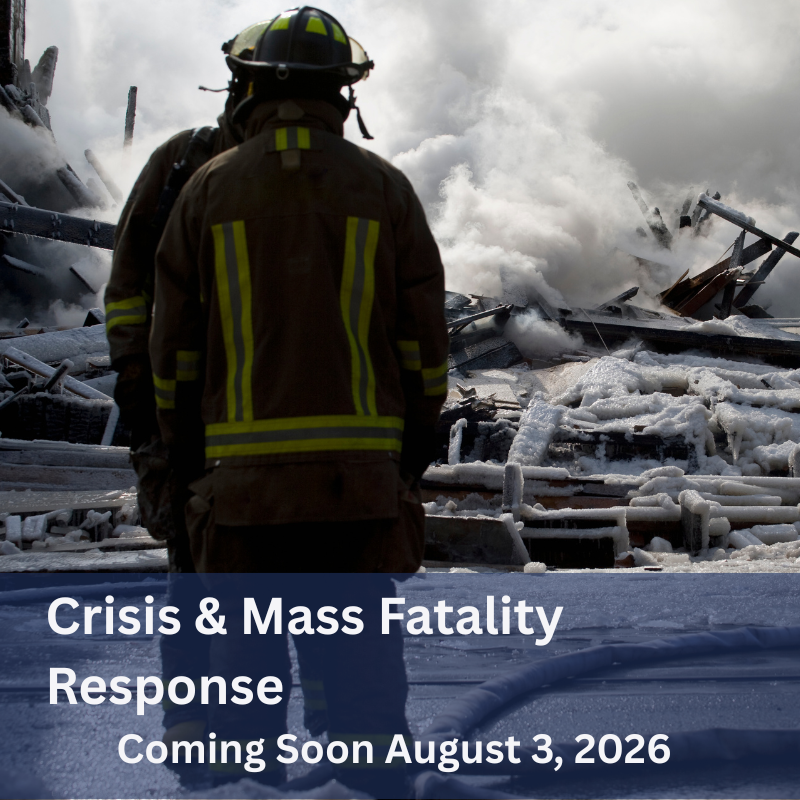
Crisis & Mass Fatality Response

Wishlist Share

About Course

Funeral service professionals may be called upon to respond during crises such as natural disasters, accidents, public health emergencies, or mass fatality events. These situations require specialized knowledge, coordination with multiple agencies, and the ability to balance compassion with efficiency under pressure. Preparedness and training are essential to ensure that care for the deceased and their families is conducted with dignity and professionalism.

This course equips funeral directors, embalmers, and staff with the skills and protocols necessary for effective crisis and mass fatality response. Topics include emergency preparedness planning, coordination with medical examiners, emergency management, and law enforcement agencies, identification and documentation procedures, temporary morgue operations, and risk management strategies. Emphasis is placed on ethical decision-making, cultural sensitivity, and maintaining professionalism in highly stressful and often chaotic environments.

By combining regulatory standards, real-world case studies, and practical tools, this training prepares participants to contribute confidently and effectively in crisis situations, ensuring the respectful handling of remains while supporting families and communities in need.

Show More

What Will You Learn?

  • Explain the role of funeral service professionals in crisis and mass fatality events.
  • Develop emergency preparedness and response plans for funeral home operations.
  • Coordinate effectively with government agencies, first responders, and community partners during mass fatality response.
  • Apply identification, documentation, and chain-of-custody procedures for human remains.
  • Implement strategies for temporary morgue management and resource allocation.
  • Demonstrate cultural sensitivity, ethical responsibility, and professionalism under crisis conditions.

Course Content

Course Introduction
This course prepares licensed funeral directors and embalmers to respond effectively during crises, disasters, and mass fatality events. It integrates advanced operational skills, interagency collaboration, and ethical decision-making to ensure that human remains are handled with professionalism, dignity, and compliance in high-pressure environments. Learning Objectives: • Define the scope of funeral service professionals’ roles in crisis and mass fatality events. • Understand the importance of preparedness, adaptability, and professionalism in response efforts. • Identify the regulatory, ethical, and cultural considerations that frame effective crisis response.

Module 1: Foundations of Crisis and Mass Fatality Response
Lays the groundwork for understanding the context, terminology, and regulatory structures governing crisis response and MFIs. Uses historic examples to highlight lessons learned. Learning Objectives: • Differentiate between crisis, disaster, and mass fatality events. • Explain the historical role of funeral service in large-scale disasters. • Identify legal and ethical responsibilities during disaster response. TO DELETE

Module 2: Emergency Preparedness and Funeral Home Readiness
Prepares funeral homes to operate under crisis conditions through emergency operations planning, facility readiness, and resource management. Learning Objectives: • Develop a funeral home emergency operations plan (EOP). • Assess facility and staff readiness for surge capacity needs. • Identify critical resources and supplies necessary for crisis response.

Module 3: Multi-Agency Coordination and Incident Command
Explores how funeral professionals interface with local, state, and federal agencies through structured systems like NIMS and ICS, ensuring smooth integration into broader emergency responses. Learning Objectives: • Demonstrate understanding of the Incident Command System and agency coordination. • Identify the roles of medical examiners, coroners, law enforcement, and public health in crisis response. • Apply strategies for effective collaboration with emergency management and community partners.

Module 4: Human Remains Recovery, Identification, and Documentation
Focuses on technical and legal standards for handling human remains during mass fatalities, emphasizing accuracy, dignity, and chain-of-custody compliance. Learning Objectives: • Apply proper recovery and handling techniques under crisis conditions. • Utilize appropriate identification methods and documentation procedures. • Maintain chain-of-custody and evidence integrity throughout the process.

Module 5: Temporary Morgue and Resource Management
Provides practical skills for setting up and managing temporary morgue operations while maximizing limited resources during surge events. Learning Objectives: • Design and organize a functional temporary morgue layout. • Implement infection control and biohazard safety protocols. • Allocate staff and resources effectively under high-demand conditions.

Module 6: Ethical, Cultural, and Religious Considerations
Addresses the sensitive balance between public health mandates and diverse cultural or religious death practices during crisis response. Learning Objectives: • Demonstrate cultural competence in responding to diverse community needs. • Analyze ethical dilemmas involving identification delays, mass burials, or cultural conflicts.

Module 7: Professional Resilience and Risk Mitigation
Examines the occupational and legal risks of crisis response, while providing tools for professional resilience and long-term sustainability. Learning Objectives: • Identify risk management strategies for staff safety and legal liability. • Recognize signs of compassion fatigue and secondary trauma. • Apply resilience and self-care strategies to support professional longevity.

Module 8: Case Studies and Applied Exercises
Engages learners in real-world scenarios and interactive simulations to practice decision-making and apply course content. Learning Objectives: • Analyze case studies from past disasters for lessons learned. • Demonstrate applied decision-making in crisis simulations. • Evaluate best practices for handling complex mass fatality challenges.

Course Conclusion
Summarizes advanced protocols and skills while emphasizing funeral service’s critical role in public health and community resilience during mass fatality events. Learning Objectives: • Recap advanced strategies for effective crisis and mass fatality response. • Reinforce the ethical and professional responsibilities of funeral service professionals in disasters.

Earn a certificate

Add this certificate to your resume to demonstrate your skills & increase your chances of getting noticed.
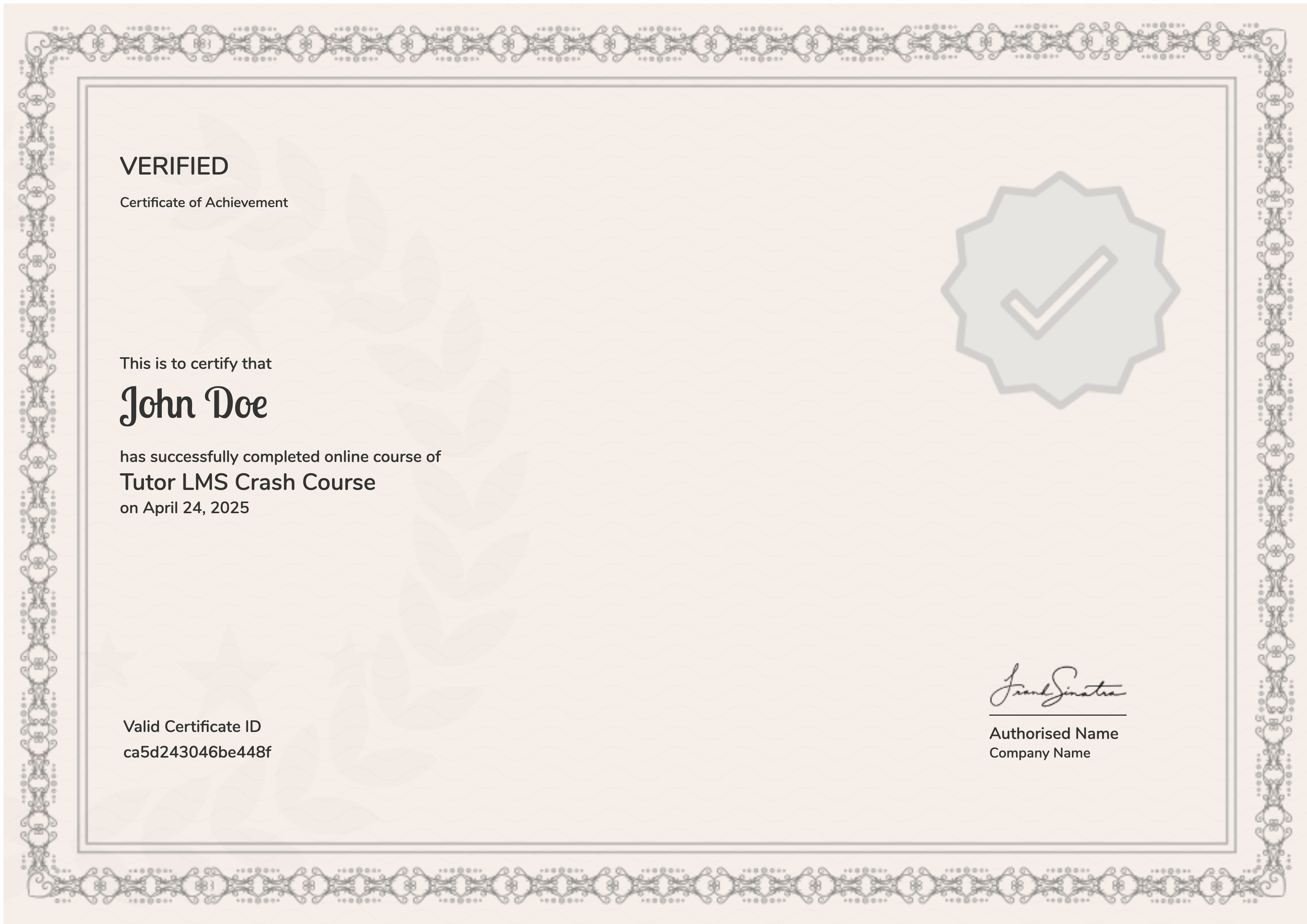
selected template

Student Ratings & Reviews

No Review Yet
No Review Yet
Shopping Cart
Scroll to Top